

(1) Inhalation process:
Motor drive / internal combustion engine rotor, the tooth groove space of the main slave rotor is turned to the opening of the intake end wall, its space is large, the outside air is filled with it, when the end face of the intake side of the rotor turns away from the inlet of the shell, the air between the tooth groove is enclosed between the main and slave rotors and the casing to complete the suction process.
(2) Compression process:
At the end of inhalation, the closed volume formed by the main and slave rotor peaks and the casing decreases with the change of rotor angle and moves in a spiral shape, which is the "compression process".
(3) Compressed gas and oil injection process:
In the conveying process, the volume is continuously reduced, the gas is continuously compressed, the pressure is increased, the temperature rises, and at the same time, the lubricating oil that becomes mist due to the air pressure difference is sprayed into the compression chamber, so as to achieve the role of compression, temperature reduction sealing and lubrication.
(4) Exhaust process:
When the closed tooth peak of the rotor rotates to meet the exhaust port of the casing, the compressed air begins to be discharged until the anastomosis of the tooth peak and the tooth groove moves to the exhaust end surface, at which time the groove space is zero, that is, the exhaust process is completed. At the same time, the other pair of grooves of the master slave rotor has been rotated to the intake end, creating maximum space and starting the suction process, thus starting a new compression cycle.
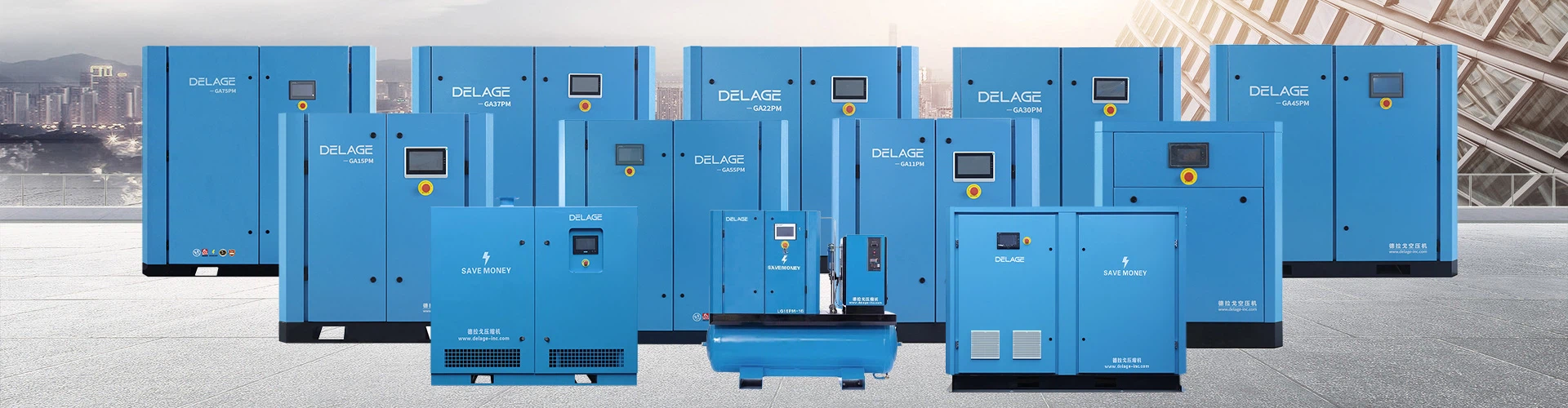
Compression Principle Of Screw Air Compressor
Sep 07, 2023
Leave a message
You Might Also Like


