

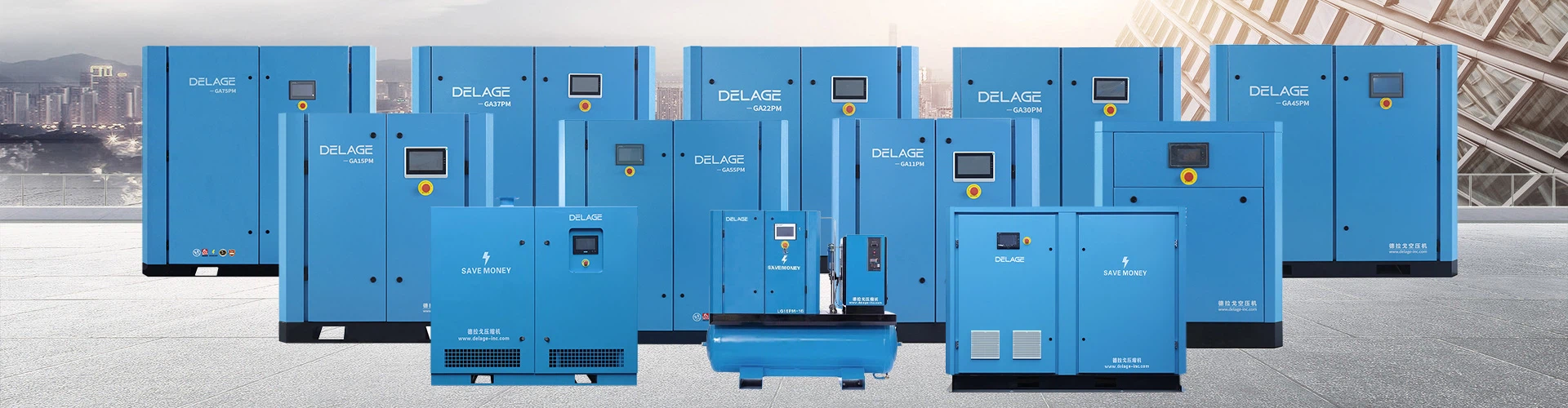
Screw Vacuum Pump
Why Choose Us
Our Certificate
The company has passed ISO9001, ISO14001, and ISO45001 international quality management system certifications, and its products have passed the testing of third-party testing agencies certified by GCCA.
Professional team
The company has an independent R&D design department and team, and has established a provincial R&D center energy efficiency testing laboratory. R&D personnel account for more than 15% of the total staff, responsible for product development and process technology guidance.
Quality Control
We design and develop specific products according to the specific needs of our customers. Before products are delivered to customers, we strictly conduct quality testing and controls to ensure product quality is stable, reliable, and energy-saving.
Our Services
The company actively provides technical consultation and answers, and quickly provides customers with corresponding product quotations to ensure that customers have a more comprehensive understanding of the company's products and receive the best service attitude.
A screw vacuum pump is a rotary sliding vane pump, consisting of two parallel screws with right-hand and left-hand threads. As these screws spin against each other, they create an airtight chamber that increases in volume as it moves towards the outlet.Screw vacuum pumps are positive displacement rotary pumps that are used to create a partial vacuum. They work by having two rotating screws that trap and move gas molecules through the pump, resulting in a reduction of pressure. This type of pump is often used in applications where a high degree of vacuum is needed.


Benefits of Screw Vacuum Pump
Oil-Free Operation
One of the most significant benefits of Screw Vacuum Pumps is their oil-free operation. Unlike traditional vacuum pumps that use oil in the compression chamber, Tekman's Screw Vacuum Pumps eliminate the risk of oil contamination, making them ideal for industries where purity is paramount, such as pharmaceuticals and electronics manufacturing.
Low Maintenance Requirements
These pumps require considerably less maintenance compared to oil-sealed counterparts. The absence of oil in the compression chamber means no regular oil changes, reducing downtime and operational costs.
Wide Operating Range
Tekman's Screw Vacuum Pumps can efficiently handle a broad pressure range, from rough vacuum to high vacuum applications. This adaptability is invaluable in the manufacturing industry, as it caters to a diverse range of processes.
Energy Efficiency
Screw Vacuum Pumps are renowned for their energy efficiency. Their innovative design allows them to operate with minimal power consumption, contributing to cost savings and sustainability in manufacturing processes.
Environmental Friendliness
The absence of oil mist emissions is a significant environmental advantage of Screw Vacuum Pumps. This aligns with the manufacturing industry's increasing focus on sustainability and reducing its carbon footprint.
High Reliability
Tekman's Screw Vacuum Pumps are known for their reliability, which is crucial in manufacturing applications where any equipment downtime can lead to significant losses.
Reduced Risk of Contamination: In man
Ceramics
Screw Vacuum pumps are used in the deaeration process of ceramic materials in extruders in the ceramic industry. This is a method of removing air to produce a product of superior quality. To achieve process efficiency, simultaneous mixing and vacuum deaeration may occasionally be used. Vacuum pumps considerably shorten the time required for deaeration.
Fabrication of metals
Since Screw vacuum pumps can withstand the entry of polluted gases, which may cause corrosion, they are crucial in the heavy fabrication sectors. Controlling surface reactions is essential for producing the desired output while treating metal. In addition to eliminating these surface impurities, vacuum pumps may also be used to degas and change the oxides that are present on a material's surface. These techniques include brazing, hardening, annealing, case hardening, sintering, tempering, and diffusion bonding. The pumps are commonly used in these processes.
Mining, oil and gas industries
For recovering carbon dioxide in flue gas compressors at a maximum temperature of 1000 fahrenheit, Screw vacuum pumps are particularly helpful. They are employed in the filling and cleaning of petroleum barrels using vacuum pumps. They are used for vacuum filtering during the dewaxing process, recovering petroleum vapour from storage tanks, and vacuum priming of pumps. The Screw vacuum filtration of mining products including alum, coal fines, copper, feldspar, fluorspar, gold, iron ore, lead, uranium, vanadium, and zinc makes use of pumps.
Manufacturing of plastics
The method of heating plastic sheets and spreading it over a mould is known as vacuum moulding. The sheet is drawn into the mould by a vacuum that is produced. The finished item is then removed from the mould. As vacuum pumps are used in this process, minimal forming pressures may be necessary, increasing process efficiency. The pumps are utilised in plastic mixers and extruders for vacuum deaeration.
Medical Industries
Screw Vacuum Pump is a major component of steam sterilisers that is useful for cooling and drying surgical equipment in the medical field. For the purpose of removing ethylene chloride during the sterilising process, they are also utilised in sterilisers. Since medical industry is a sensitive one, vacuum pumps are used with utmost care.
Screw Vacuum Pump Varieties Using Positive Displacement
Positive displacement pumps regularly increase a cavity's volume by expanding it. Following a portion of the chamber being sealed off and drained, gas or fluids are pumped to the desired locations. This is constantly done. The most typical pumps are rotary vane pumps. The design of diaphragm pumps prevents oil pollution, and they are also widely used. The resistance of liquid ring pumps to dust is quite high. Pumps with pistons and blowers are also rather typical.
Components of Screw Vacuum Pump


Driver Screw
It's a screw pump's spinning component. The driver screw connects to the motor's driving shaft. It aids in the consistent volumetric flow rate of fluid pumping. The timing gear is connected to one end, while the drive shaft is connected to the other.
Driven Screw
High-tensile steel metal is also used for the driven screw. Because of the movement conveyed by the timing gear, it rotates around its axis. It spins in the opposite direction as the driver's gear. The clearance area of this screw is constant. This aids in catching water inside the restricted space.
Timing Gear
The timing gear drives the driven screws in such a way that the female and male rotor assemblies do not make metal-to-metal contact. It establishes a link between the driver and driven screws. The driver screw rotates the timing gear, which then transmits that rotation to the driven screws. It drives screws in this manner. Even if the pump is turned off for a short time, it guarantees that no such connections are made.
Inlet & Outlet Ports
The intake and exit ports of a screw pump are distinct. The water is sucked into the pump through the intake port, and it is discharged through the output port. When the pump ultimately stops, the inlet and output are designed to ensure that there is enough liquid medium. This aids in the delivery of the pump's initial liquid medium. As a result, the suction tube should not dry out quickly, even if it is empty or dry.
Pressure Relief Valve
Screw pumps are a type of positive displacement pump that builds pressure even while the outlet is closed. This builds up pressure, which can lead to major problems including pump internal part damage and harm to the pump operator. As a result, every positive displacement pump has a relief valve to safeguard the pump, the operator, and any associated gear. Extra pressure is returned to the intake using this valve. Recirculating the exit fluid is another well-known method of reducing extra pressure.
Bearings
During pump operation, the top bearings of a vertically mounted screw pump sustain heavy loads as well as axial and radial stresses. As a result, the load on the lower bearings is minimal.The bottom bearing's primary function is to keep the pump's components aligned. Water screw pumps, roller bearings and slide bearings mounted in parallel, on the other hand, they have relatively low loads. This is due to the fact that the generated radial and axial forces are opposed and cancel one another out.
Driving Shaft
The driving shaft links the pump assembly to the drive motor. This connection is made possible by the use of the proper set of flexible couplings.This driving shaft is a critical component of many types of pumps, and it goes from side to side to ensure the driver screw's operation.
Energy consumption
How efficient is a particular product in generating a certain volume or CFM for a given horsepower? As with air compressors, the energy use of a vacuum pump dwarfs the purchase price over the life of the product. And often exceeds sticker price within a year or two.
Water consumption
Some vacuum systems (like liquid ring vacuum pumps) consume water while others do not. And while that may not be an issue for some, it is increasingly important in water-deficient areas like the U.S. West Coast.
Handling discharge water
Discharge water can be contaminated with oil, solids or fluids. In most areas, it cannot simply be discarded into municipal sewer systems. So you have to find a way to dispose of it safely.
Consumable parts. Different kinds of vacuums require parts like oil, filters and other similar items.
Dealing with carryover
Different systems have different ways of handling carryover materials, which can include anything from powders and dust particles to blood and other organic material.
Process contamination
Depending on the process, you must be conscious of the way particles and fluids are captured and dispersed to prevent contamination.
Service life
The type of industrial vacuum pump you select is critically important in determining the lifespan of your equipment. But, as we will discuss in the equipment selection section, it's equally important that the capabilities of the pump are a good fit with the demands of the application. Rotary screw vacuum pumps, for instance, will last years or even decades with minimal maintenance, like oil changes and oil monitoring, while life expectancy of liquid ring and vane vacuum pumps is much shorter.
Centralized vs
Point-of-use systems. Many industrial plants deploy dozens of small, fractional-horsepower vacuum units wherever they need vacuum capability in their facility. Over the years, we've found it's much more efficient to have a centralized unit that's going to be more energy efficient. It may have a higher initial cost, but the total cost of ownership is lower. And you can build in backup, as mentioned below.
The Screw vacuum pump working principle involves two CS screws with variable pitch & tapered design run parallel to each other with small clearances. Gas flows in an axial direction from the inlet port to exhaust port. The pumped gases move axially towards the exhaust port by the spiralling motion of the screw.screw vacuum pump manufacturer in india with the mechanism of non-contacting and oil-free.
Screw vacuum pump working principle design produces a high compression ratio across the pump. It results in smooth, gradual compression with deeper vacuum level of <0.01 mmHg. Atlas Copco DWS water and air cooled series has the dry screw vacuum pump working principle with the improved rotor design gives excellent thermal control and optimised pumping at all inlet pressures which eliminate the need for rotor coatings while maintaining deeper ultimate vacuum performance. Read more about DWS Dry screw vacuum pump here.
Inspect the Surrounding Environment
You vacuum pump may be mechanically sound, but it needs the right environmental conditions to perform at peak efficiency. Check the area surrounding your vacuum pump and ensure that it has ample space for unencumbered airflow. Are there any contaminants or solvents in the area that could impact the pump's performance? Weather and ambient temperature can also potentially be an issue especially if your vacuum pump is running near an outside wall or heating unit which could cause condensation build up and create problems.
Conduct a Visual Pump Inspection
Most vacuum pumps come equipped with a site glass, making frequent visual inspections of the oil inside the pump a simple matter. Clean oil will appear about the same color as vegetable oil and as the oil collects contaminants, it will get darker. This will help guide you in ensuring preventative oil changes are done in a timely manner and avoiding costing service. Check around the pump for oil or water leaks as indicators of a broader issue. Make note of any unusual sounds coming from the unit or a change in performance-both also indicators of potential service issues.
Do Regular Oil & Filter Changes
The maintenance manual that accompanies your vacuum pump will provide the detailed service intervals required to achieve optimal performance. With dry pumps, an oil change in the gearbox is typically required annually while oil-sealed pumps could require monthly oil and filter changes depending on usage and application. In addition, pumps that are air-cooled with a radiator can potentially get plugged externally from dust, so regular cleaning of debris is highly recommended to prevent overheating.
Perform Leak Testing
By leak testing your pump system periodically after it's been installed, you can ensure that there is a vacuum-tight seal though the various connections. Eliminating these leaks can prolong the life of your pump and improve the quality of the work it produces. Keeping foreign elements such as debris, moisture, and oxygen, from contaminating your vacuum pump can prevent the risk of compromising the integrity of your unit and reducing its effectiveness.
Notes for the use of screw vacuum pumps
Protection against corrosion
Various measures can be effective in protecting the vacuum system or the individual vacuum pumps against corrosion. The first possibility is to prevent corrosive substances from entering the interior of the vacuum pump. This can be implemented by upstream condensers or gas scrubbers.The second possibility to avoid corrosion is to keep the process stream in the gas phase. This can be implemented in a screw vacuum pump by setting a certain operating temperature. In addition, the process gas can be diluted by a supplied ballast gas to reduce the partial pressure of the condensable gases.
Protection against particle entry
Screw vacuum pumps should always be operated with an inlet screen or an inlet filter. This is to prevent particles from entering the inside of the vacuum pump. Due to the precise manufacturing of screw vacuum pumps with the associated small clearances and tolerances, there is a certain sensitivity to entrained particles. Dry screw vacuum pumps are frequently used with particulate dryers, especially in the pharmaceutical industry. A certain number of such particles can easily pass through the vacuum pump together with the process gas or be flushed out at the end of the process. Nevertheless, it is advisable to take appropriate precautions in order to prevent particles from being sucked in on a regular basis. For example, Busch offers a large number of different particle filters for every application.
Leak-tightness
Vacuum pumps and vacuum systems in a chemical environment must be so tight, since even a minimum of ambient air entering can potentially cause an explosive atmosphere. The escape of toxic or explosive gases is also cause for concern. Polymer o-rings are generally used to prevent leaks between two stationary parts. The resistance depends on the selected polymer. The seal material therefore also needs to be adapted to possible process gases.Busch Vacuum Solutions has had a dynamic sealing concept for rotating shaft feedthroughs certified by TÜV SÜD, in accordance with the Technical Instructions on Air Quality Control (TA Luft). These seals are considered technically leak-tight.
Tips for operation
For most applications, it is recommended that the vacuum pump is warmed up for a certain lead time before process operation. This allows the specified temperature to be set. After the end of the process, it is recommended to purge the vacuum pump with non-condensable inert gas to completely remove the process gas from the vacuum pump before switching it off. Nitrogen is normally used for this flushing process. Flushing the vacuum pump with a cleaning liquid at the end of the process is also pos-sible and recommended if there is a risk of deposits forming inside the vacuum pump during cooling.
Our Factory
Zhejiang Delage Machinery Compressor Co., Ltd. (referred to as "Delage Machinery" or "Delage Air Compressor") was established in 2013 and is located at No. 1, Gongqu District 1, Chang'an Town, Haining, Jiaxing City, Zhejiang Province (close to Hangzhou and Shanghai), covering an area of approximately 6,398 square meters, and has built a standardized factory building of approximately 15,000 square meters.The company is mainly engaged in the manufacturing and processing of air compressors, power savers and accessories; the wholesale of air compressors and supporting equipment, energy-saving products and supporting equipment, Wujinjiaodian, building decoration materials, plumbing equipment, filtration and purification equipment and accessories, lubricating oil, Retail; repair, maintenance, and leasing services of air compressor equipment and supporting equipment, energy-saving products and supporting equipment; technology development, technical consultation, technology transfer, and technical services in the field of energy saving; engaged in the import and export business of various commodities and technologies (National Except for those restricted or prohibited; except for those involving pre-approval), etc. Products have been widely used in textile, medicine, aerospace, cement, food and other industries.
Our Certificates


FAQ
Q: What is screw vacuum pump?
Q: What is a screw pump?
Q: What are the advantages and disadvantages of screw vacuum pumps?
Q: What is the difference between screw pump and claw pump?
Q: What is the difference between screw and vane vacuum pumps?
Q: What are the advantages of screw pumps?
Q: What is an example of a screw pump?
Q: What is the working principle of dry screw vacuum pump?
Q: Why is a vacuum pump used?
Q: What is the difference between vacuum and vacuum pump?
Q: What is the main advantage of screw pump rather than external gear pump?
Q: Where are screw pumps used?
Q: What classification is screw pumps?
Q: Which type of vacuum pump is best?
Q: Can screw pump run dry?
Q: Is a screw pump a reciprocating type of pump?
Q: What is the discharge pressure of a screw pump?
Q: What are screw pumps made of?
Q: How does a vacuum pump work?
Q: What is the basic principle of vacuum pump?
We're professional screw vacuum pump manufacturers and suppliers in China, specialized in providing high quality custom service. We warmly welcome you to wholesale high-grade screw vacuum pump made in China here from our factory.
Rotary Screw Vacuum Pump, Screw Vacuum Pump, Screw Type Vacuum Pump