

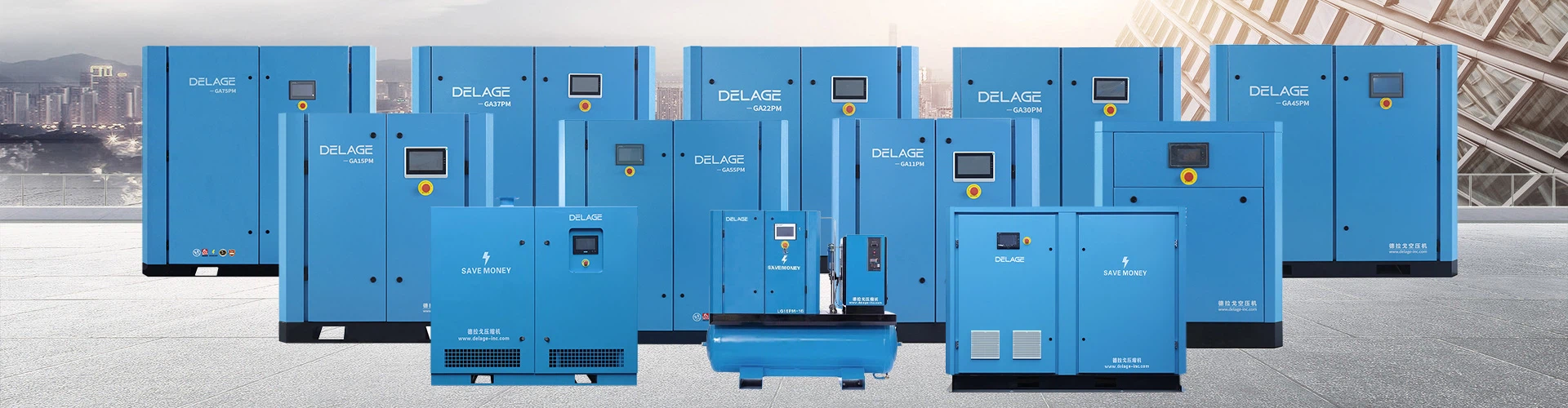
Air Compressor
Why Choose Us
Our Certificate
The company has passed ISO9001, ISO14001, and ISO45001 international quality management system certifications, and its products have passed the testing of third-party testing agencies certified by GCCA.
Professional team
The company has an independent R&D design department and team, and has established a provincial R&D center energy efficiency testing laboratory. R&D personnel account for more than 15% of the total staff, responsible for product development and process technology guidance.
Quality Control
We design and develop specific products according to the specific needs of our customers. Before products are delivered to customers, we strictly conduct quality testing and controls to ensure product quality is stable, reliable, and energy-saving.
Our Services
The company actively provides technical consultation and answers, and quickly provides customers with corresponding product quotations to ensure that customers have a more comprehensive understanding of the company's products and receive the best service attitude.
An air compressor is a machine that takes ambient air from the surroundings and discharges it at a higher pressure. It is an application of a gas compressor and a pneumatic device that converts mechanical power (from an electric motor, diesel or gasoline engine, etc.) into potential energy stored in compressed air, which has many uses. A common application is to compress air into a storage tank, for immediate or later use. When the delivery pressure reaches its set upper limit, the compressor is shut off, or the excess air is released through an overpressure valve. The compressed air is stored in the tank until it is needed.[1] The pressure energy provided by the compressed air can be used for a variety of applications such as pneumatic tools as it is released. When tank pressure reaches its lower limit, the air compressor turns on again and re-pressurizes the tank. A compressor is different from a pump because it works on a gas, while pumps work on a liquid.


Benefits of Air Compressor
Embracing Energy Efficiency
Air compressors embody the epitome of energy efficiency. Powered by a heavy internal motor, an air compressor effectively converts electrical energy into kinetic energy. Their efficiency depends on several factors such as motor horsepower, tank capacity, and output pressure. Advanced technology allows these tools to adapt their energy consumption to specific needs, significantly contributing to energy conservation.
The Swiss Army Knife of Power Tools
Air compressors are versatile and multifunctional powerhouses. And with the right air tools, they can tackle a vast range of tasks. From professional drilling, sanding and polishing, to spray painting, air compressors are incredibly adaptable. Portable models are easy to transport to different job sites, or around the same site, as needed. It's also easy to change air tools to tackle a variety of jobs.
Prioritising Safety
The safety advantages of air compressors are many. They minimise the risk of electrical shocks better than electrically powered tools, and are safe to operate in areas with combustive gases or at high temperatures. The appropriate air compressor and air tool combo can also handle higher torque ratings, and strenuous high-temperature operations, without breaking.
Reliability and Maintenance
Air compressors and power tools are well-known for their dependability and low maintenance. Their high air quality and robust design reduce the likelihood of a malfunctioning tool, ensuring reliable functioning.
The Economical Choice
Not many people realise how budget-friendly air tools really are. As a power source, air compressors are not merely energy-efficient, but also super cost-effective. With lower initial and replacement costs than their electric tool counterparts, they offer serious savings. They also provide an added layer of security, as their unique nature makes air compressors and air-driven tools less attractive to potential thieves than standard power tools.
Additional Benefits
Air compressors are robust and operate quietly, generating virtually zero emissions, but still provide high torque and power output. These green champions partner with ergonomically designed air tools to make extended use more comfortable for operators.
To Power and Inflate Construction Equipment
Commercial air compressors can be used to inflate tires on construction equipment like forklifts, scissor lifts, and loaders. They can also be used to power pneumatic tools like jackhammers and nail guns.
To Power Water Pumps for Farms
Air compressors are used in the agriculture industry to power water pumps. Because water is an essential resource for crops and livestock, it's important that the mechanism used to deliver water is effective and consistent. Air compressors can support water delivery systems and offer a backup method of pumping water in case of an emergency.
To Power Gas Turbines
Air compressors are often used in gas turbines to produce compressed air flow. The compressor brings air into the machine, pressurizes it, and then transports it into the combustor where it combines with fuel, generating power.
Sandblasting
Sand blasters clean abrasive materials that can be difficult to remove, like rust on metal. Compressed air is part of the mechanism these tools use to clean, providing some of the necessary force.
Food Packaging
In the food and beverage industry, air compressors are used in the packaging process. They can vacuum-seal products, sealing in freshness and preventing leakage and contamination.
Automobile Production
Air compressors have a variety of uses in automobile shops. In addition to being a component of many vehicles, they're also used to inflate vehicle tires, in paint sprayers to airbrush vehicle bodies, and to operate equipment.

Piston air compressors
As the name suggests, a piston air compressor uses a piston to compress air. Comprised of two cylinders, this arrangement pressurizes air as it moves from one drum to another. It's the most straightforward approach to generating pressurized air.In a related article, we explain the difference between oil-injected and oil-free piston air compressors. Since friction is created as the piston moves, oil is usually required to keep everything running smooth.However, there's also oil-free models, which use fans and other alternatives to cool heat caused by the metal components. If cool, clean air is important for application, this equipment works well.
Rotary screw air compressors
Instead of using a piston to compress air, rotary screw compressors use two screw rotors to achieve the same goal. This arrangement allows for different drive designs, creating new possibilities.We go into various setups in our article on air compressor technology, which is worth checking out. It dives into how and why rotary screw air compressors are superior to piston compressors.These advancements come in the form of different technologies, monitoring tools, and devices designed for rotary screw air compressors. Additionally, it's possible to use different mechanisms for powering the rotors.
Air Compressor Motor
The air compressor motor serves as the powerhouse of the compressor system. It provides the necessary mechanical energy to drive either the air end (in rotary screw compressors) or the compressor pump (in reciprocating compressors). Motors can vary in terms of power source (electric motor or gas-powered motor), size (horsepower, or HP), and efficiency. The motor's power is directly related to the capacity of the compressor: a larger motor can drive a compressor that produces more compressed air.
Air End (for Rotary Screw Compressors)
In rotary screw air compressors, the air end is where the actual compression takes place. The compression chamber consists of two interlocking rotors — one male and one female. As the rotors turn, they decrease the volume of captured air, effectively compressing it. The efficiency and reliability of the air end play a crucial role in the overall performance of the compressor.
Compressor Pump (for Reciprocating Air Compressors)
In reciprocating air compressors, the compressor pump functions through a piston-cylinder mechanism. The piston moves within the cylinder, drawing in ambient air and compressing it. Multi-stage air pumps have multiple cylinders that compress the air in successive stages, allowing for higher pressure. The pump, much like the air end in rotary screw compressors, is essential for the generation of compressed air, making its maintenance vital for the system's longevity and efficient operation.
Oil Pump/Lubrication System
The lubrication system is a critical component in most air compressors, including oil-flooded rotary screw and lubricated piston compressors. The primary role of an oil pump, for compressors that have one, is to circulate lubricating compressor oil to the compressor's various moving parts, minimizing friction, wear, and heat generation. By ensuring consistent lubrication, the oil pump helps prolong the compressor's lifespan, prevent overheating, and maintain optimal performance.
Pressure Gauges
A pressure gauge on an air compressor is an essential instrument that displays the current pressure level within the system, typically measured in pounds per square inch (PSI) or bar. This gauge allows operators to monitor the compressor's output and ensure it's operating within the desired and safe pressure range.
How to Choose Air Compressor
Analyze the requirements of the equipment that you will be powering
Are you going to be using the compressor to power machinery or to power pneumatic tools or to simply inflate a tire? You'll probably want a compressor with a tank if you plan on using tools that require high flow. You may want a portable compressor without a tank if you plan on merely using it for air brushing or filling a tire. Since there is no tank to store the compressed air the tankless type will run continuously, which usually isn't an issue since they are usually quite small and therefore make minimal noise.
Understand the types of compressor available
Essentially, there are two different kinds of air compressors: reciprocating and rotary screw. The most common type you'll likely see for sale somewhere is the reciprocating piston type. It has a cylinder with a piston that moves up and down and a one-way valve on top of the moving piston. Some air compressors utilize a dual piston setup for higher flow and/or pressure. The other type of air compressor is the rotary screw. These are designed for continuous use and are often used with tools that run for several seconds (or minutes) at a time, such as impact wrenches and jackhammers, and in industrial applications.
Consider space and portability
For example, will you be able to roll the compressor or lift it off the ground if you need to? Air compressors can be small, portable items or larger, more powerful fixtures. Portability is convenient, but if it will stay in one corner of the garage, you may be able to use a longer hose, instead, and have a higher capacity compressor. Essentially, does this compressor need to supply a nail gun on the roof, or just fill tires in the garage?
Consider your power source
Will you have the luxury of electricity at all times, or will you be in environments without electricity? If you'll be next to an outlet at all times, you can choose a drive system with an electric motor. Most electric air compressors will run on 110V (US), but some larger ones run on 240V. Find out before you make the purchase.
Air Compressor Working Principles
Air Intake
All compressors start their process with the intake of ambient air. Air enters the compressor through an intake valve.
Compression Phase: Depending on the type of compressor, this stage can vary.
Rotary Screw Compressors
Two helical screws, or rotors, rotate in opposite directions, trapping and compressing the incoming air between them.
Reciprocating (Piston) Compressors
The piston moves within a cylinder, decreasing its volume and compressing the air. Two-stage air compressors (or multi-stage air compressors, such as high-pressure air compressors) have an additional stage of compression to reach higher pressures (PSI).
Cooling Process
As compression generates heat, the air is typically cooled between stages, especially in multi-stage compressors, to make the subsequent compression more efficient.
Storing Compressed Air
Once compressed, the air enters a storage tank. This tank holds the compressed air, allowing pressure to build up.
Pressure Regulation
As the tank fills, the pressure inside increases. A pressure gauge is used to monitor this. Once the pressure reaches an upper limit, the compressor stops or unloads. When the pressure drops to a predetermined lower limit as the air is used, the compressor restarts or reloads to refill the tank.
The horsepower (HP) rating for a compressor indicates the power output of the engine or motor. Higher horsepower creates greater air pressure, measured in PSI. Higher PSI means the compressor can store more air in the tank, allowing you to operate air tools longer. Cubic feet per minute (CFM) and standard cubic feet per minute (SCFM) describe the volume of air a compressor delivers at specific PSI levels. The CFM value changes as PSI changes. As you lower the PSI output, CFM increases. A compressor with a higher CFM rating can deliver more air and is better suited for heavier applications, such as operating air wrenches and framing nail guns.
Compressor manufacturers rate storage tank size in gallons. Smaller tanks-around 4 to 6 gallons — are sufficient for many projects, such as airbrushing and operating brad nailers or nail guns. Larger tanks store more compressed air at higher pressures. They're suited for larger tasks that require sustained air flow, such as automotive work and remodeling projects.

Position Air Compressor Properly
Find a flat and stable area to place your air compressor on.
Refrain from putting the air compressor on any surface that feels uneven or flimsy.
Connect the power cord to a grounded electrical outlet nearby. Make sure the power is turned off.Do not use the compressor in an outlet that isn't grounded.
Check Oil Level
Manually check your air compressor's oil level.
Most piston-type portable compressors have a gauge near the motor that will give an oil level reading.Remove the oil cap and add oil to the specified mark, if necessary.
Check the compressor instructions if oil level cannot be determined.
Check The Drain Valve
Check the drain valve which is typically located at the bottom of the air tank.
You'll want the valve to be completely closed.
If the valve is slightly open, it can be tightened with an adjustable wrench.
Prepare Air Tank
Start by flipping the power switch to the“on”position.
Let the compressor run for at least one minute.
Monitor the air pressure gauge and make sure the compressor switches off when the pressure capacity is reached.
Make note that the air pressure is measured by PSI.
Set PSI
Using the air control valve, adjust the maximum PSI of the compressor.
Adjust the pressure until the recommended air pressure for a specific tool is reached.
Several adjustments may need to be made to achieve desired air flow.
Connect Air Hose
Begin by attaching the air hose to the air compressor.
If you are unsure where to attach the air line, check the manual.
If required, wrap the threaded end of the hose. You may need to wrap the hose with PTFE tape, depending on the compressor model.
Use an adjustable wrench to tighten the hose, locking it in place.
How to Maintain Air Compressor
Follow the Instruction Manual
The best way to take care of your air compressor is to read and follow the instruction manual that comes with your purchase. This must be the first thing you need to read and learn before even starting to use your air compressor. It provides ways and tips to properly conduct air compressor maintenance.
Drain Tanks Moisture
If you live in a humid environment, the air compressor tank will collect moisture faster. Most air compressors have draining valves and you need to make sure that these valves are drained regularly. Keep in mind to release the air first before draining the water.
Tighten Fasteners
As you use your air compressor over time, the vibration will cause screws, nuts, and bolts to loosen. This is why it is advisable to regularly check these parts and fasten them to make sure that your air compressor is working at its best.
Check and Change Air Filters If Needed
A heavy build-up of dust and dirt in your air compressor’s air filter may cause it to take in some of these residues. When this happens, the air compressor is forced to work harder than it should. It lowers the output capacity of the power tool. Make sure to check air filters regularly and change them if the build-up is already heavy.
Keep the Intake Vents Cleaned
Regularly check the intake vents of your compressor to make sure that they are clean. Taking in dirt and dust inside causes your air compressor to work harder and easily overheat. This is especially important if your air compressor is located in a dusty environment.
Check and Change Compressor Oil
Compressor oil plays an important role in how the air compressor works. It acts as a lubricant and a cooling agent that prevents your air compressor to overheat easily and prevent its parts from wear and tear. Follow the instructions stipulated in your instruction manual on the frequency of changing compressor oil and the type of oil that you should use.
Our Factory
Zhejiang Delage Machinery Compressor Co., Ltd. (referred to as "Delage Machinery" or "Delage Air Compressor") was established in 2013 and is located at No. 1, Gongqu District 1, Chang'an Town, Haining, Jiaxing City, Zhejiang Province (close to Hangzhou and Shanghai), covering an area of approximately 6,398 square meters, and has built a standardized factory building of approximately 15,000 square meters.The company is mainly engaged in the manufacturing and processing of air compressors, power savers and accessories; the wholesale of air compressors and supporting equipment, energy-saving products and supporting equipment, Wujinjiaodian, building decoration materials, plumbing equipment, filtration and purification equipment and accessories, lubricating oil, Retail; repair, maintenance, and leasing services of air compressor equipment and supporting equipment, energy-saving products and supporting equipment; technology development, technical consultation, technology transfer, and technical services in the field of energy saving; engaged in the import and export business of various commodities and technologies (National Except for those restricted or prohibited; except for those involving pre-approval), etc. Products have been widely used in textile, medicine, aerospace, cement, food and other industries.
Our Certificates


FAQ
Q: How often should we change the oil?
Q: When should I replace the air intake filter?
Q: What is the difference between stop-start and constant run?
A constant run compressor means the motor continuously runs and continuously turns the pump. Many industrial shops who need consistent air on a daily basis will purchase a constant run compressor
Voltage
Q: What voltage do I run on?
Q: Will my compressor run on a generator?
Q: What is the difference between stop-start and constant run?
Q: What happens when water stays in my compressor?
Q: What happens if there is water in my lines?
"I often times forget to drain the water from my tank, is there something that can do this manually [sic automatically] for me?" Yes! You can purchase a drain valve. There are three main types of drain valves, including float actuated, electronically actuated or timed sequence actuated
Hoses
Q: What size of hose should be used?
Generally, the larger the compressor means the larger size of diameter you can use. Most homeowner compressor manufacturers would recommend a 1/4" hose diameter.
Q: What is the maximum hose length I should use with my compressor?
Q: How much air will I need to power my air compressor tool?
Q: How often until a new compressor is 'broken in'?
Q: How often should I service my compressor?
Q: What is a good tank size?
Q: What is the difference between a rotary screw compressor and a reciprocating compressors?
Q: Will my small homeowner air compressor be able to handle an extra tank?
Q: My compressor stores air at high pressure, yet my tools will require a low pressure application; what do I do?
Q: What is most important in an air compressor?
Q: What are the requirements for an air compressor?
Q: Why do we need air compressor?
We're professional air compressor manufacturers and suppliers in China, specialized in providing high quality custom service. We warmly welcome you to wholesale high-grade air compressor made in China here from our factory.
HPC Screw Compressor, Screw Driven Air Compressor, Twin Screw Compressor