

Why Choose Us
Our Certificate
The company has passed ISO9001, ISO14001, and ISO45001 international quality management system certifications, and its products have passed the testing of third-party testing agencies certified by GCCA.
Professional team
The company has an independent R&D design department and team, and has established a provincial R&D center energy efficiency testing laboratory. R&D personnel account for more than 15% of the total staff, responsible for product development and process technology guidance.
Quality Control
We design and develop specific products according to the specific needs of our customers. Before products are delivered to customers, we strictly conduct quality testing and controls to ensure product quality is stable, reliable, and energy-saving.
Our Services
The company actively provides technical consultation and answers, and quickly provides customers with corresponding product quotations to ensure that customers have a more comprehensive understanding of the company's products and receive the best service attitude.
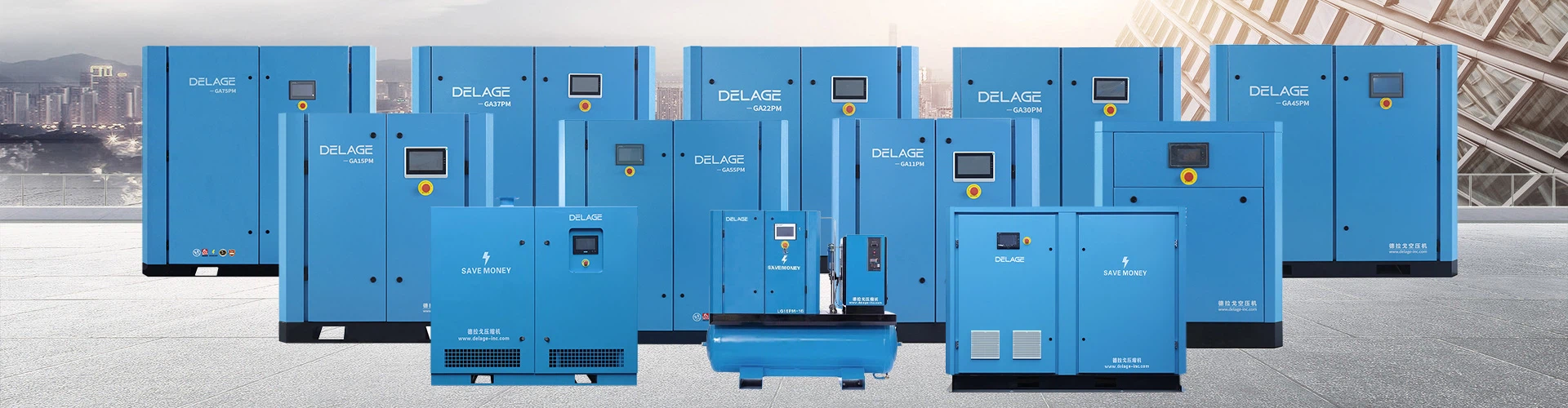
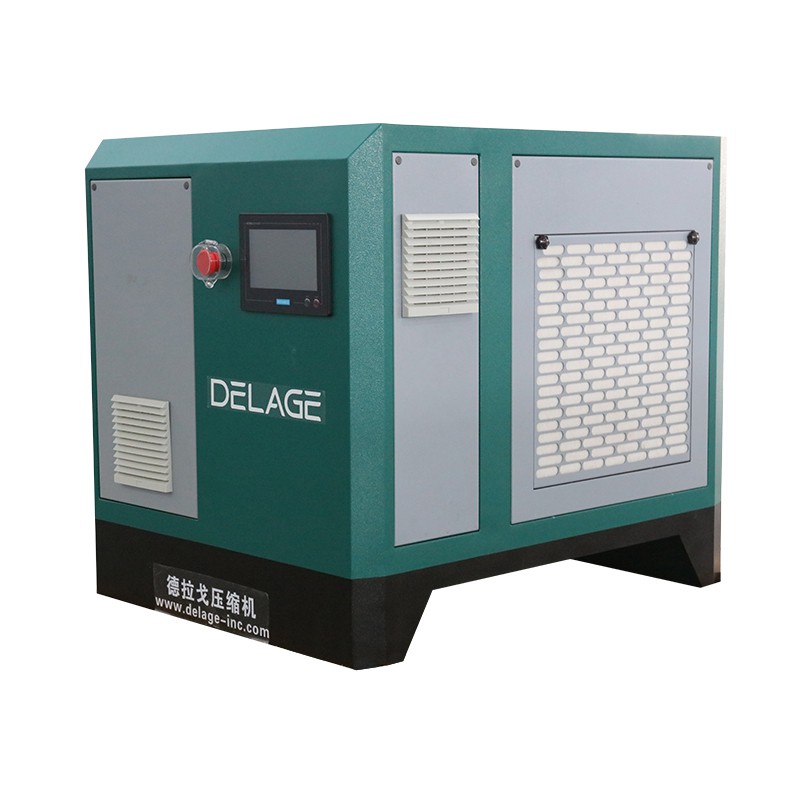
The series variable frequency screw compressor is equipped with a high-efficiency permanent magnet motor, which has excellent energy-saving performance, smooth operation and low noise, allowing it to be installed close to the point of gas consumption.Screw air compressors can also be integrated with other equipment and systems, such as cooling systems, air conditioning systems, pumping stations, etc., to achieve wider applications and benefits. The most important thing is that the screw air compressor can have continuous trouble-free movement, long service life, and simple maintenance, which can save more maintenance costs.


Benefits of Inverter Screw Compressor
Greater Capability
Output from inverter systems surpasses that of conventional compressors. Their motors, which have variable speeds, are the key to this tremendous capacity. When necessary, the motor's selectable speeds allow it to spin faster and compress warm air from your refrigerator or a warm area. Additionally, the motor has the ability to run at a low speed to conserve energy while not in use. Thus, how do inverter systems function? Sensors inside the compressor unit provide a digital signal to variable-speed motors. They provide more capacity by volume as a result. Over time, inverter systems also yield steady output.
Precise Temperature Adjustments
Accurate temperature management is crucial whether storing costly chemicals or perishable foods. For legacy compressors, turning on or off the system requires a precise temperature change. Conversely, inverter compressors are more susceptible to variations in temperature. You may fine-tune your temperature settings to suit particular applications because these newer compressors respond to digital inputs. Additionally, the inverter air compressor reacts fast to changes in ambient temperature. They are perfect for controlling the climate in both homes and businesses because of this function. You won't have to worry about keeping your property at a constant temperature after upgrading.
Quiet Operation
The quiet operation of inverter air compressors is one of their most exciting features. The inverter model, in contrast to conventional compressors, reduces residual noise by using adjustable speeds and direct current. You won't likely hear the frequent humming and grinding noises made by legacy systems as a result. In these contemporary systems, alternating current is converted to direct current, hence the word "inverter." A variable motor is then powered by the combination of the direct current and magnetic field. A smoother, quieter operation made possible by the use of magnets makes them perfect for both home and business applications.
Enhanced Energy Efficiency
Conventional air compressors can waste energy like any other equipment if they overheat or don't function at their best. Because the motor of a legacy compressor is controlled by an on/off switch, it often runs hot. They require more frequent maintenance and consume more energy as a result. Energy efficiency is a top priority for inverter air compressors. For instance, they disperse heat from compressed air using premium fans and aluminum coils. When used in conjunction with a variable-speed motor that adjusts its speed to match your desired temperature, inverter systems function effectively without increasing your energy usage.
Manufacturing Industry
Inverter Screw compressors are widely used equipment in the manufacturing industry. Air supply in manufacturing processes is vital for the proper functioning of many machines and equipment. In this field, Inverter screw type air compressors offer a continuous and uninterrupted air supply while saving energy.
Food and Beverages Industry
Hygiene is an important factor in the food and beverages industry. Inverter Screw type compressors are an ideal choice to satisfy the hygiene standards in air supply systems used during food production. They also improve production processes by supporting the maintenance of equipment used in food production.
Automotive Industry
Automotive industry requires high air pressures. Inverter Screw type compressors are notable for their capability to provide high-pressure air for different applications used in automotive production. In many automotive processes such as spray painting, brake systems and tire production, Inverter screw type air compressors are frequently the first choice of compressed air systems.
Energy Industry
The energy sector has critical processes such as the generation and distribution of power. Inverter Screw type compressors provide efficiency in this industry by being employed in power plants and gas transmission systems. Compressed air is used in many processes in the energy industry and Inverter screw type compressors are ideally suited to meet this requirement.
Chemical Industry
The chemical industry requires various chemical processes and stages of production. Inverter Screw type compressors are widely used in this industry for compressing, mixing, and transporting gases. They provide a reliable air supply and improve productivity in the chemical processes.

Inverter Screw compressors work by using two intermeshing helical screws, known as rotors, to draw in air from the surrounding atmosphere. As the rotors turn, the volume between them decreases, resulting in the compression of the air. These rotors are driven by an electric motor, which can be either direct-drive or gear-driven. The compressor's discharge valve then opens and the compressed air is discharged into a storage tank, where it is stored until it is needed. The amount of compression that a screw compressor can achieve is limited by the rotational speed of the screws and the size of the intermeshing gap between them. In addition, the temperature of the air being compressed also plays a role in limiting the amount of compression that can be achieved.
Rotors/Rollers
There are few elements as critical as rotors. They are the centralized components of the compression process, without which, air compressors cannot function or exist normally. Rotors or rollers come in pairs and are built inside cylinders. When turned on, rotors rotate at high, smooth, sweeping speeds, creating the pipeline for suctioned air to move through, be compressed, and then exit in an ultra-pressurized form.
Compression Cylinder
These compressor models include mainline compression cylinders, which house their all-important rollers. Collected air runs through a cylinder's chambers and into the interlocking, spinning rotors. The number of cylinders contained in a unit determines how many "stages" the particular unit has, as well as the level of pressurization it can generate.
Air Filters
Air filters are the first of several essential layers of filters built within this type of compressors. The inlet air filter rests just inside the compressor's opening valve, attracting dust, moisture, and air particles that would be damaging to the inside of the machine. Other air filters may be set within chamber components for additional cleaning and protective layers.
Oil Filters
In the case of oil-lubricating compressors, oil filters are placed both within rotating chamber walls and near discharge valves, in order to properly sift oil lubrication from compressed air. Liquid lubrication also provides the cooling needed for compression machines, which produce high heat that is unsafe for optimal air and machine capacities.
Bearings
Bearings sit at both rotor ends and help rotors stay securely in place, rotating evenly and properly balancing their loads. They are typically anti-friction and anti-corrosive, with several design modifications based on the size, scale, and output expectations of the compressor unit-whether oil-lubricating or oil-free.
Suction Valve
The suction valve sits atop most compressing units and is responsible for initial retrieval of raw gas. At a cue given by the unit's system stage control, the suction valves open to allow air to rush inside, where it mixes and is trapped within the interlocked twin rotors.
Discharge Valve
Likewise, discharge valves sit at the opposite end of the suction valve and cue the end of the compression cycle. They receive the now-pressurized air and release it into a holding or storage tank, or out of a discharge pipe for immediate application.
Motor
The compressor motor powers the rotations of the rollers at automatic and adjusted settings, which in turn powers the entire compression capabilities of the machine.
System Control
Given their multi-control scheme settings, operators need a system control display, in order to read and gauge a unit's health and overall output. A system control displays and monitors the various components of a compressor, as well as its operating, idling, or stopping parameters. In high-capacity, automatic units working nearly 24/7, the gauge allows safe and procedural pressures to be monitored, with or without human oversight.
How to Choose Inverter Screw Compressor
Capacity and Airflow
The capacity and airflow of a Inverter screw compressor will determine how much compressed air it can produce and how quickly it can do so. It is essential to match the compressor's capacity and airflow to your specific application's needs to avoid underperforming or overpaying for unnecessary capacity.

Operating Pressure and Duty Cycle
Inverter Screw compressors are designed to operate within specific pressure ranges, and it is essential to select a compressor that can meet your required operating pressure. Duty cycle refers to how often the compressor will be used and for how long. The compressor's duty cycle must match your application's requirements to ensure reliable and consistent operation.

Energy Efficiency
Energy efficiency is a crucial factor when selecting a Inverter screw compressor. Compressors that are highly energy efficient can reduce operating costs significantly. Energy efficiency can be measured by the compressor's specific power, which is the amount of energy consumed per unit of compressed air produced.

Maintenance Requirements
Inverter Screw compressors generally require less maintenance than other types of compressors. However, regular maintenance is still necessary to ensure the compressor's longevity and efficient operation. When selecting a compressor, it is essential to consider its maintenance requirements and factor them into your operating costs.
Safe and reliable
The Inverter screw compressor has a simple structure and operates smoothly and reliably. They usually have a long service life and lower failure rate, and can adapt to the high requirements and harsh environment of the chemical industry. In addition, screw compressors have lower vibration and noise levels, reducing adverse effects on equipment and operators.Applications and advantages of screw compressors.
Wide operating range
Inverter Screw compressors have a wide operating pressure range and regulation performance. Relying on Sollant's core technology and based on customer needs, customers are provided with customized gas solutions. They can automatically adjust working parameters, such as rotation speed, pressure and temperature, according to actual needs to adapt to changes in different processes. This flexibility allows screw compressors to adapt to the complex and changing working conditions in the chemical industry.
Multi-media applicability
Inverter Screw compressors can adapt to the compression needs of a variety of gas media. Whether it is dry gas, wet gas, gas containing solid particles or corrosive gas, the screw compressor can compress it stably and efficiently. This multi-media suitability makes screw compressors ideal for use in the chemical industry.
Energy saving and environmental protection
Inverter Screw compressors excel in energy efficiency and can significantly reduce energy consumption and carbon emissions. By adopting advanced frequency conversion speed regulation technology and heat recovery system, energy efficiency can be further improved and energy conservation and environmental protection can be achieved. Sollant actively responds to the global call for "carbon peak and carbon neutrality", contributes China's strength to the development of the global low-carbon economy, and reflects its corporate responsibility.
How to Maintain Inverter Screw Compressor
Daily Inspection
A daily inspection of the main elements of your system will keep your air compressor running at optimal levels. We recommend that you review the following:Fluid levels. Check the oil level before starting your compressor each day, using the sight glass. Make sure to add oil if the level has dropped. Running your compressor without enough oil will damage key components, causing premature wear and shortened compressor life.
Condensate traps and drain points. Remove any scale, rust, dirt or any other solids. These materials can accumulate in drain traps, eventually building up and causing drains to become stuck. If the drain is in an open position, air will escape, and pressure will drop. If it's closed, liquids will remain in the compressed air and move downstream.Leaks. The average system loses between 30% and 50% of its volume to air leaks. For more on leaks, see our blog post, "How To Find and Stop Air Leaks."
Weekly Maintenance Schedule
Once a week, you should clean all exposed surfaces, especially the heat exchanger fins, to remove dust and dirt that would limit the unit's ability to release heat into the ambient air.You'll also want to tighten up the various connections periodically.
Long-term Maintenance Schedule
Your extended maintenance schedule should include a walkthrough with your air compressor consultant monthly or at least quarterly. They can spot an issue before it becomes a problem. And a problem before it becomes a catastrophe.
Compressor Servicing
When it comes time to service your compressor, your checklist should include the following:Change compressor Oil breaks down over time, so it needs to be changed following your manufacturer's recommended schedule. Fluids are typically rated at 8,000 hours, assuming the compressor operates at 185°F. But, as mentioned earlier, you will want to accelerate the pace of oil changes if your compressor is running at high temperatures. You'll also want to include regular oil sampling to meet your warranty requirements (see below). And, if your compressor begins to use more oil than usual, contact your air compressor professional.
Our Factory
Zhejiang Delage Machinery Compressor Co., Ltd. (referred to as "Delage Machinery" or "Delage Air Compressor") was established in 2013 and is located at No. 1, Gongqu District 1, Chang'an Town, Haining, Jiaxing City, Zhejiang Province (close to Hangzhou and Shanghai), covering an area of approximately 6,398 square meters, and has built a standardized factory building of approximately 15,000 square meters.The company is mainly engaged in the manufacturing and processing of air compressors, power savers and accessories; the wholesale of air compressors and supporting equipment, energy-saving products and supporting equipment, Wujinjiaodian, building decoration materials, plumbing equipment, filtration and purification equipment and accessories, lubricating oil, Retail; repair, maintenance, and leasing services of air compressor equipment and supporting equipment, energy-saving products and supporting equipment; technology development, technical consultation, technology transfer, and technical services in the field of energy saving; engaged in the import and export business of various commodities and technologies (National Except for those restricted or prohibited; except for those involving pre-approval), etc. Products have been widely used in textile, medicine, aerospace, cement, food and other industries.
Our Certificates


FAQ
Q: Why do screw compressor valves lose efficiency over time?
Compressor manufacturers typically design these components to operate efficiently for several thousand or millions of operation cycles. However, several factors such as variability in the demand pattern, sizing of the air compressor against a certain air demand, the environment in which the air compressor operates, promptness of preventive maintenance, etc. determine how long these valves efficiently operate.
Q: Why do screw compressor valves need preventive maintenance?
Case studies show that operating a screw air compressor with a worn-out / malfunctioning valve could increase its overall power consumption by 10 - 15%. Power cost contributes to more than 75% of the compressor's total life cycle cost over ten years and hence this is a significant impact. Unserviced valves also lower the life span of downstream accessories by half. In some cases, a malfunctioning safety valve may result in a catastrophe.Air compressor manufacturers typically offer convenient valve maintenance kits for customers that contain the internal parts of the valve that wear or age out. Changing the valve kits is a much more sensible and economical option than changing the complete valve.
Q: What is the recommended frequency to maintain a screw compressor valve?
In particular, the safety valve must be inspected and certified every year per the local safety laws to ensure they are functional and efficient. Sometimes, replacing the safety valve entirely with a valid certificate for one year is more economical as the certification procedures could be equally expensive on an existing valve.A timely preventive maintenance on these valves pays back several times as the compressor operates efficiently and safely.
Q: How to identify a compressor that could potentially have a worn-out valve?
Q: What is inverter type compressor?
Q: What are the benefits of inverter compressor?
Q: What is the difference between inverter and traditional compressor?
Q: What is the difference between inverter and rotary compressor?
Q: Why is it called an inverter compressor?
Q: How does an inverter compressor work?
Q: What is the advantage of a non inverter compressor?
Q: Is an inverter compressor AC or DC?
Q: Which compressor is better rotary or inverter?
Q: What is the difference between inverter compressor and scroll compressor?
Q: What is LG inverter compressor?
Q: What is the voltage of inverter compressor?
Q: What is an inverter used for?
Q: Which type of compressor is best?
Q: What is the most efficient compressor type?
Q: Which is better scroll or screw compressor?
Hot Tags: inverter screw compressor, China inverter screw compressor manufacturers, suppliers, factory


