


Why Choose Us
Our Certificate
The company has passed ISO9001, ISO14001, and ISO45001 international quality management system certifications, and its products have passed the testing of third-party testing agencies certified by GCCA.
Professional team
The company has an independent R&D design department and team, and has established a provincial R&D center energy efficiency testing laboratory. R&D personnel account for more than 15% of the total staff, responsible for product development and process technology guidance.
Quality Control
We design and develop specific products according to the specific needs of our customers. Before products are delivered to customers, we strictly conduct quality testing and controls to ensure product quality is stable, reliable, and energy-saving.
Our Services
The company actively provides technical consultation and answers, and quickly provides customers with corresponding product quotations to ensure that customers have a more comprehensive understanding of the company's products and receive the best service attitude.
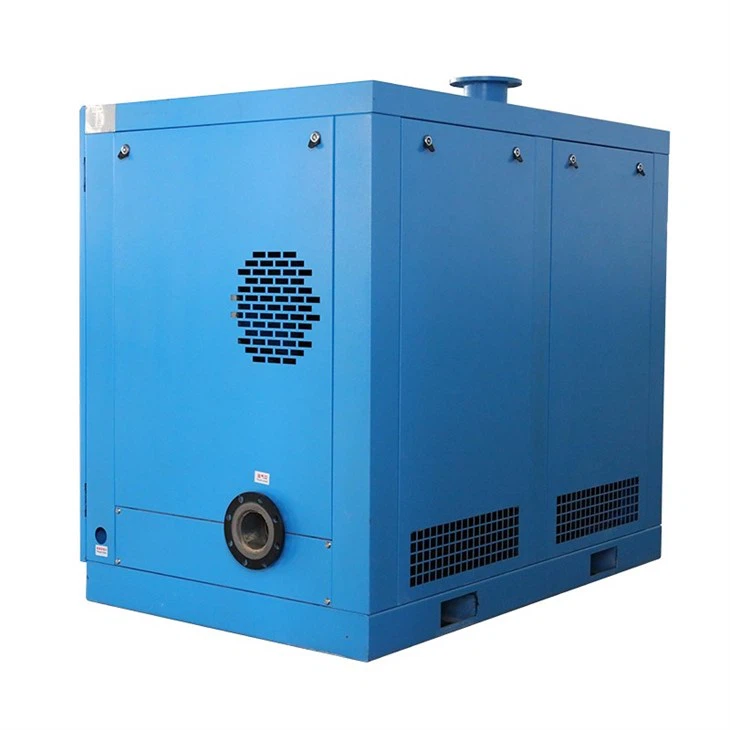
Oilless vacuum pumps are also considered compressor pumps that work oil-free. These dry pumps vacuum are quieter, lighter, and easier to move. They are also easy to maintain and rarely break down. The majority of our pumps are quiet, but many believe the oilless pumps are the quietest available.

Environmentally Friendly
Oilless pumps are also environmentally friendly, since no special oil, traps, or oil filtration accessories are required.
More Efficient And Versatile
An oil-filled vacuum pump typically requires the use of traps, which require a lot of attention and maintenance, leading to speed losses. On the other hand, oil-free vacuum pumps are capable of delivering full pumping speed without any breaks, at all times.Oilless pumps tend to be more portable, compact, and lightweight when compared to their oil-filled counterparts. They are also more flexible, as they can be used for pumping a variety of materials, including hydrogen, helium, solvents, and water vapor. They can also operate in any orientation, including sideways, or even upside down.
Hassle-Free Operation
Oil-filled pumps require a lot of maintenance and attention, including oil changes at regular intervals. On the other hand, oilless vacuum pumps are virtually maintenance-free and much easier to repair.
What are the Applications of Oilless Pump
Manufacturing
Vacuum pumps are indispensable in manufacturing processes such as vacuum casting, heat treatment, and electronic component fabrication. They help eliminate contaminants, regulate pressure, and establish optimal conditions for accurate production.
Research and Development
In scientific research, vacuum pumps are crucial for experiments that demand specific pressure conditions. They are employed in material science, physics, chemistry, and other fields to create controlled environments.
Medical and Healthcare
Vacuum pumps are essential components in medical devices like MRI machines, contributing to the creation of the required vacuum levels for accurate imaging. They are also crucial for vacuum-assisted wound closure and freeze-drying pharmaceuticals.
Energy and Environment
Vacuum pumps play a critical role in power plants by maintaining vacuum conditions in steam condensers, enhancing overall efficiency. Furthermore, these pumps contribute to environmental protection by facilitating processes like sewage treatment.
Space Exploration
In the realm of space exploration, vacuum pumps are used to replicate space conditions on Earth and to establish low-pressure environments in satellite propulsion systems.
Food Industry
Vacuum pumps are employed in the food packaging industry to remove air from packaging, thereby extending the shelf life of perishable goods. They also aid in the production of products like freeze-dried foods.
Vacuum Deaeration
Vacuum pumps are crucial for various applications, including composite plastic molding processes, lamp and vacuum tube manufacturing, semiconductor processing, electron microscopy, and medical procedures requiring suction.
Analytical Instrumentation
Vacuum pumps are utilized in analytical instrumentation to analyze gases, liquids, solids, surfaces, and biomaterials. They are essential for mass spectrometers to create high vacuums between the ion source and detector.
Dry vacuum pump
The dry vacuum pump refers to the vacuum pump that is not suitable for any oil and liquid in the pump cavity and can discharge air directly, such as claw pump, reciprocating piston pump, screw pump, oil-free rotary vane pump, etc.
The claw type oil-free vacuum pump
Belongs to the variable volume vacuum pump, and uses the multi-stage claw type rotor in series, so it can maintain the compression ratio, speed and dynamic balance for a long time. The compression ratio of claw pump is higher in high pressure area because of less counter current along the axial direction. The suction and exhaust port of claw pump is arranged on the end wall of the pump cavity, which is convenient for multi-stage connection and has smooth air passage.
Roots type vacuum pump
Roots type vacuum pump uses two 8-shaped rotors to rotate in the pump shell for vacuumizing, which is generally used as a booster vacuum pump, and its principle is similar to roots blower.Roots vacuum pump is divided into ordinary type and direct exhaust type. The ordinary roots vacuum pump needs to be directly connected with the front-end mechanical pump to discharge into the atmosphere, while the direct air roots vacuum pump does not need to connect with the front-end mechanical pump.
Oil free reciprocating vacuum pump
The reciprocating vacuum pump uses the reciprocating linear motion of the piston in the cylinder to vacuumize, and the piston is driven by the crank connecting rod mechanism through the motor. The oil-free reciprocating vacuum pump adopts self-lubricating materials. There is no need to add lubricating oil to the piston ring, sealing ring and cylinder to realize the oil-free inside the cavity. In addition, an oil separation chamber is added between the cylinder and the body to further prevent the leakage of lubricating oil in the body from entering the cylinder and prevent the pump chamber from being polluted by oil.

The oil-free pump moves forward and backward via fixed seals. The reciprocating motion of the oil-free pump causes periodic changes in the working volume of the pump chamber, thereby achieving suction and discharge of liquid. The seal of an oil-free pump is mounted on the plunger through a smooth cylinder wall. It mainly uses a plunger to reciprocate in the pump cylinder, thereby changing the volume between the plunger and the pump wall, repeatedly sucking in and discharging liquid, and increasing its pressure. Generally speaking, oil-free pumps have better initial use characteristics. Oil-free pumps have the advantages of high rated pressure, compact structure, high efficiency, and convenient flow adjustment.
Vacuum Level
The pump selection heavily depends on the level of vacuum that needs to be obtained. Typically, the different pressure ranges in vacuum technology are defined as follows:Rough vacuum (from 10 3 mbar to 1 mbar).
Impact Of The Process On The Pump
Dependent upon the application area and medium to be pumped, the choice of pump(s) will vary. For example, rotary vane (RV) pumps are suited for a wide range of low and medium vacuum applications, including research and development, analytical instruments, industrial and coating activities, freeze drying, process engineering and many more.The use of oil as a sealant and coolant allows for very good pumping performance and suitability for many applications, including where dirt, dust or condensates might be present.
Pump Impact On Application
Evaluating the impact of the vacuum pump on the application or process is just as important. There are several variables that can influence the choice between different types of vacuum pumps, including - but not limited to:Oil or hydrocarbon emission.
Investment And Maintenance
As well as considering what needs to be achieved, initial capital costs, operating costs and maintenance needs should be assessed.Taking two high vacuum pump technologies, turbomolecular pumps (TMP) and oil diffusion pumps, as examples, it is fair to state that the initial costs for TMP usually will be significantly higher compared to an oil diffusion pump. However, considering the cost of ownership over a five-year period, oil diffusion pumps might cost more due to higher energy and maintenance costs. For some products, economic advantages might apply from a certain pump size/performance class.
Pumping Speed
The pumping speed of an oilless pump refers to the volume of air it can suck in an hour. Usually, the minimum amount is 3 m3/hr and the maximum amount is 60 m3/hr depending on the size and capacity of the pump.
Ultimate Pressure
When an oil-free pump creates a vacuum, it increases the pressure level in the vacuum zone. This pressure level is a maximum of 1-pa for a dry pump. Hence, such pumps are usually used as backup pumps.
Noise Level
An oilless pump makes about 55 dB(A) noise within a 1-meter range. This indicates that these pumps are not very loud. This is why vacuum pumps are great for various applications.
Leak Tightness
The leak tightness of a vacuum pump is measured by the volume of air it leaks in a second. So, the lower this value the better the pump is. An oilless pump has a leak tightness of about 10-6 Ltr/s which is a very low value.
Suck-Back Protection
Oil-free pumps have one-way exhaust valves. Such valves force the air out of the Palm and do not let them get back inside from the exhaust part.
How to Maintain Oilless Pump
Check the oil level regularly
Regularly check the oil level of your vacuum pump to make sure it has enough oil to keep the pump running properly.
Change the oil & filters regularly
Changing the oil in your vacuum pump helps to keep the pump running in top condition and reduces wear on the internal components. So, when do I change my vacuum pump oil?After a 100-hour break-in period of pump operation.
Regularly inspect and clean your vacuum pump
This includes checking for signs of wear, tear, and potential damage, as well as cleaning the interior and exterior of the machine. Ensure that all components are properly lubricated and that there are no blockages or obstructions in the system. One of the main ways to do an internal cleaning of particles and sludge build-up in mechanical pumps is using flushing fluid. Using FF Grade Flushing Fluid as part of your regular pump maintenance will ensure your vacuum pump is free of contaminants. The low viscosity helps free contamination from internal parts and discharge it through the drain valve.
Inspect the surrounding environment
Vacuum pumps require the right conditions to operate at peak performance. In some conditions, the pump has a greater chance of breaking down and creating a halt in operations. In order to optimize productivity, you should be aware of this.The airflow around your pump can be critical to its performance. Are there any other contaminants in the area - vapors, solvents, acid - that could be of concern? If so, determine whether they are impacting your pump's integrity and performance.
Check the Vacuum Pump for Leaks
Before using your vacuum pump, you should check for any possible leaks. Inspect all connections, hoses, and seals for tightness, and check for any signs of cracks or damage. Eliminating leaks can prolong the
life of your pump and improve the quality of work it produces.
The Following Matters Should be Paid Attention to When Using Oil-Free Pumps
● If a small amount of organic gas is inhaled during the operation of the vacuum pump, in order to prevent the organic gas condensate from corroding the internal components, the air should be evacuated for at least 0.5-1h.
● It is forbidden to directly suck liquid into the vacuum pump. If a small amount of liquid is sucked in during the working process of the vacuum pump, the vacuum pump should not be shut down immediately after use, and the air should be pumped for at least 0.5-1h to empty.
● The vacuum pump is not suitable for pumping hot gas. If you really need to pump high-temperature gas for a long time, it is recommended to add a cold trap in front of the vacuum pump to reduce the temperature of the gas pumped into the vacuum pump.
● Maintain good ventilation to facilitate heat dissipation and prolong life.
● When used in a vacuum drying oven, please pay attention to open the vacuum valve of the vacuum drying oven, start the vacuum pump to vacuum the drying oven, and then start the vacuum drying oven to heat up after reaching the required vacuum.
● When used in the suction filter device or waste liquid suction, please pay attention: timely dump the liquid in the liquid collection bottle, and the liquid directly into the vacuum pump can easily cause damage to the vacuum pump. Do not immediately turn off the vacuum pump, when a small amount of liquid is pumped accidentally during use. It is recommended to immediately unplug the pump tube connected to the vacuum pump to allow the vacuum pump to pump air for at least 0.5-1h for evacuation; if a large amount of liquid is accidentally pumped into the vacuum pump, it needs to be repaired in time.
Our Factory
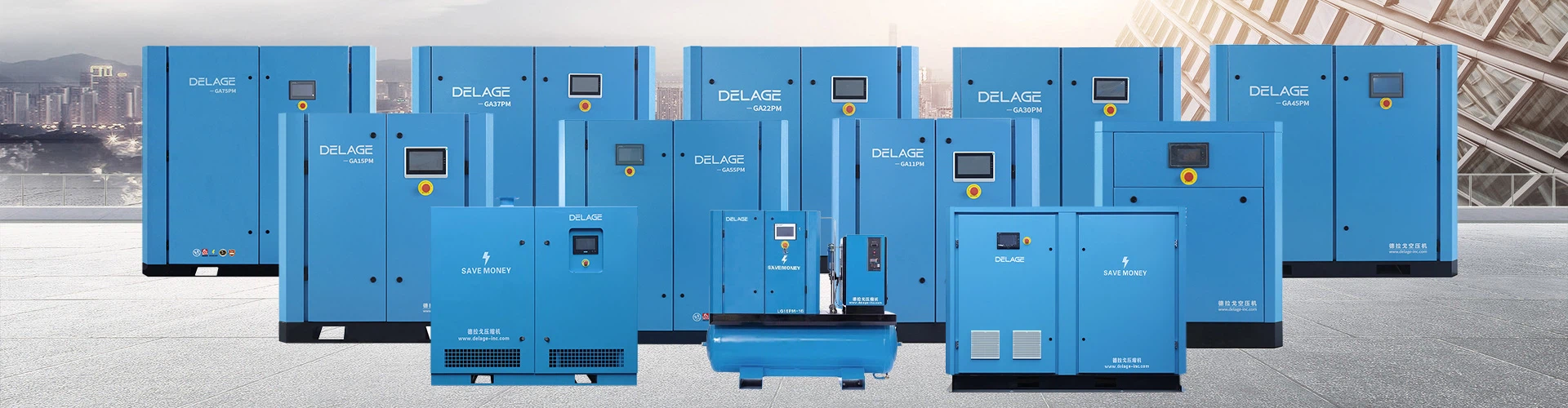
Zhejiang Delage Machinery Compressor Co., Ltd. (referred to as "Delage Machinery" or "Delage Air Compressor") was established in 2013 and is located at No. 1, Gongqu District 1, Chang'an Town, Haining, Jiaxing City, Zhejiang Province (close to Hangzhou and Shanghai), covering an area of approximately 6,398 square meters, and has built a standardized factory building of approximately 15,000 square meters.The company is mainly engaged in the manufacturing and processing of air compressors, power savers and accessories; the wholesale of air compressors and supporting equipment, energy-saving products and supporting equipment, Wujinjiaodian, building decoration materials, plumbing equipment, filtration and purification equipment and accessories, lubricating oil, Retail; repair, maintenance, and leasing services of air compressor equipment and supporting equipment, energy-saving products and supporting equipment; technology development, technical consultation, technology transfer, and technical services in the field of energy saving; engaged in the import and export business of various commodities and technologies (National Except for those restricted or prohibited; except for those involving pre-approval), etc. Products have been widely used in textile, medicine, aerospace, cement, food and other industries.
Our Certificates


FAQ
Q: How Long should you Maintain a Vacuum Pump?
Daily maintenance needs:Check the vacuum pump oil level and the color of the vacuum pump oil.
Weekly maintenance needs:Check the vacuum pump for oil leaks. Use the air gun to clean the dust and debris.
Monthly maintenance needs:Check the function of the vacuum pump oil mist separator. If necessary, please replace it.
Every six months maintenance needs:Check the vacuum pump chamber for dust, dirt, carbon deposits, if necessary, clean the vacuum pump chamber; clear the vacuum pump fan cover, wind impeller, ventilation grille, cooling fins.
Every 500-2000 working hours maintenance needs:Please replace the oil mist separator and vacuum oil, and check the float valve and return pipe.
Q: Why does a Vacuum Pump Need Oil?
Q: How do oil-free pumps work?
Q: What is the working principle of oil-free vacuum pump?
Q: Which is better oil or dry vacuum pump?
Q: How often do you change the oil in a vacuum pump?
A common question for vacuum pump owners is, "How often should you change the oil on a vacuum pump?" It is an excellent question and reminds us that periodic maintenance keeps your equipment operating at optimal performance and extends the life of your pump. We recommend every 500 hours.
Q: How important is an oil pump?
Q: Why do you need an oil pump?
Q: What does oil free pump mean?
Q: Why use an oil free compressor?
End products and uses will have significantly less oil condensate. Any industries with sanitary requirements, such as Food & Beverage and Pharmaceutical manufacturing, would be better off utilizing oil free compressors for their facilities.
Q: What is the mechanism of oil free compressor?
Q: What is an oilless vacuum pump?
Q: What is the difference between oil free pump and oil pump?
Q: Does vacuum pump oil evaporate?
In all vacuum pumps, the oil vapor pressure is important because the oil is exposed to the gas being pumped from the chamber. If the oil vapor pressure is too high, it will vaporize when exposed to vacuum, and the vapor can contaminate the vacuum chamber (referred to as backstreaming).
Q: What happens if vacuum pump has too much oil?
Q: How much oil does a vacuum pump use?
Q: Can you clean vacuum pump oil?
Q: Why do oil pumps fail?
Q: How long is an oil pump good for?
Q: How do I choose an oil pump?
Hot Tags: oilless pump, China oilless pump manufacturers, suppliers, factory


