

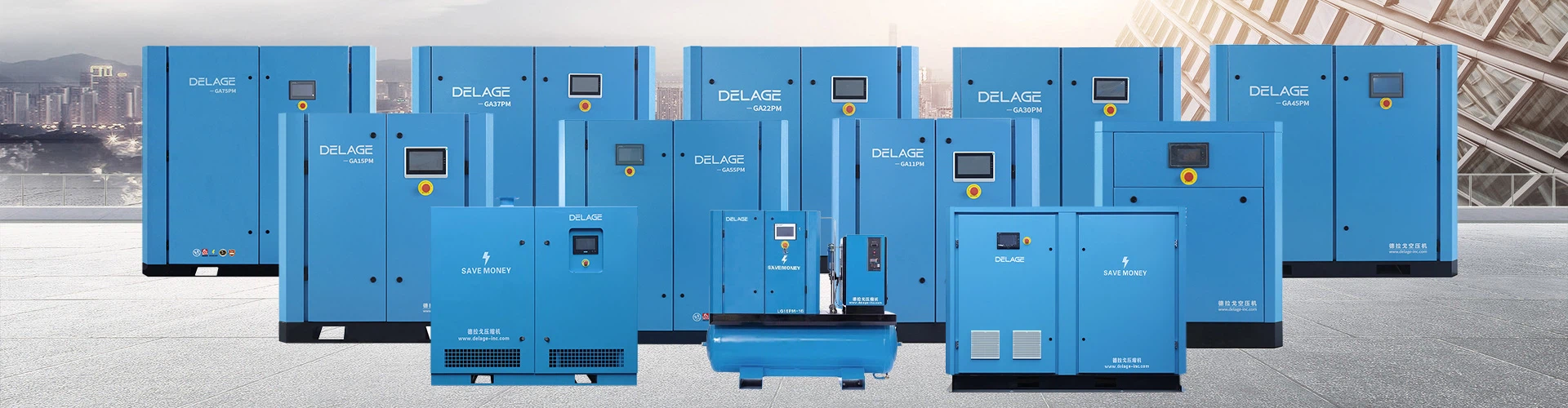
Rotary screw compressors are a vital component in various industrial applications, known for their efficiency and reliability. These compressors use a rotary-type positive displacement mechanism to compress gas, typically air, making them essential in numerous sectors. This article delves into the purpose, working principles, and diverse applications of rotary screw compressors, highlighting their significance in modern industry.
A rotary screw compressor operates using two interlocking helical rotors, commonly referred to as screws. These rotors rotate in opposite directions, trapping and compressing the gas between them. The continuous motion of the screws ensures a steady flow of compressed air, which is a significant advantage over other types of compressors that may produce pulsating air flow.
The primary purpose of a rotary screw compressor is to provide a reliable source of compressed air for various industrial processes. Unlike piston compressors, which can be noisy and produce vibrations, rotary screw compressors are known for their quiet operation and minimal vibration. This makes them suitable for environments where noise reduction is crucial.
The working principle of a rotary screw compressor involves the following steps:
1. Intake Phase: Air enters the compressor through the intake valve.
2. Compression Phase: As the rotors turn, the air is trapped between the rotor lobes and the casing. The volume of the trapped air decreases as it moves along the length of the rotors, leading to compression.
3. Discharge Phase: The compressed air is then discharged through the outlet valve.
This continuous process ensures a constant supply of compressed air, which is essential for many industrial applications.
There are two main types of rotary screw compressors:
1. Oil-Injected Screw Compressors: These compressors use oil to lubricate the rotors and seal the gaps between them, enhancing efficiency and cooling the compressed air. They are commonly used in applications where a small amount of oil contamination is acceptable.
2. Oil-Free Screw Compressors: These compressors do not use oil in the compression chamber, making them suitable for applications requiring clean, oil-free air, such as in the food and pharmaceutical industries.
Rotary screw compressors are versatile and find applications in various industries:
1. Manufacturing: In manufacturing plants, compressed air is used to power pneumatic tools, control systems, and automation equipment. The reliability and efficiency of rotary screw compressors make them ideal for these applications.
2. Construction: Construction sites often require portable and robust air compressors to power tools like jackhammers, drills, and sandblasters. Rotary screw compressors are preferred due to their durability and ability to provide a continuous air supply.
3. Oil and Gas: In the oil and gas industry, rotary screw compressors are used for gas lift operations, pipeline maintenance, and equipment purging. Their ability to handle high-pressure applications makes them indispensable in this sector.
4. Food and Beverage: The food and beverage industry requires clean, oil-free compressed air for packaging, bottling, and processing. Oil-free rotary screw compressors ensure that the air used in these processes is free from contaminants.
5. Healthcare: In healthcare facilities, compressed air is used in various medical devices and systems. Oil-free rotary screw compressors provide the necessary clean air for these critical applications.
6. Energy Sector: The energy sector utilizes rotary screw compressors for various applications, including power generation and distribution.
Their efficiency and reliability are crucial for maintaining continuous operations.
Rotary screw compressors offer several advantages over other types of compressors:
1. Continuous Operation: Unlike piston compressors, which may require frequent stops for cooling, rotary screw compressors can operate continuously, providing a steady supply of compressed air.
2. Energy Efficiency: These compressors are designed to be energy-efficient, reducing operational costs in the long run.
3. Low Maintenance: Rotary screw compressors have fewer moving parts compared to piston compressors, resulting in lower maintenance requirements and longer service life.
4. Quiet Operation: The design of rotary screw compressors ensures quiet operation, making them suitable for noise-sensitive environments.
5. Compact Design: These compressors are typically more compact than piston compressors, saving valuable space in industrial settings.


