

Altitude plays a crucial role in the performance of various mechanical devices, and turbo blowers are no exception. As a turbo blower supplier, I have witnessed firsthand how altitude can significantly impact the functionality and efficiency of these powerful machines. In this blog post, I will delve into the science behind how altitude affects the performance of a turbo blower and provide insights for customers who operate in high - altitude regions.
Basic Principles of Turbo Blowers
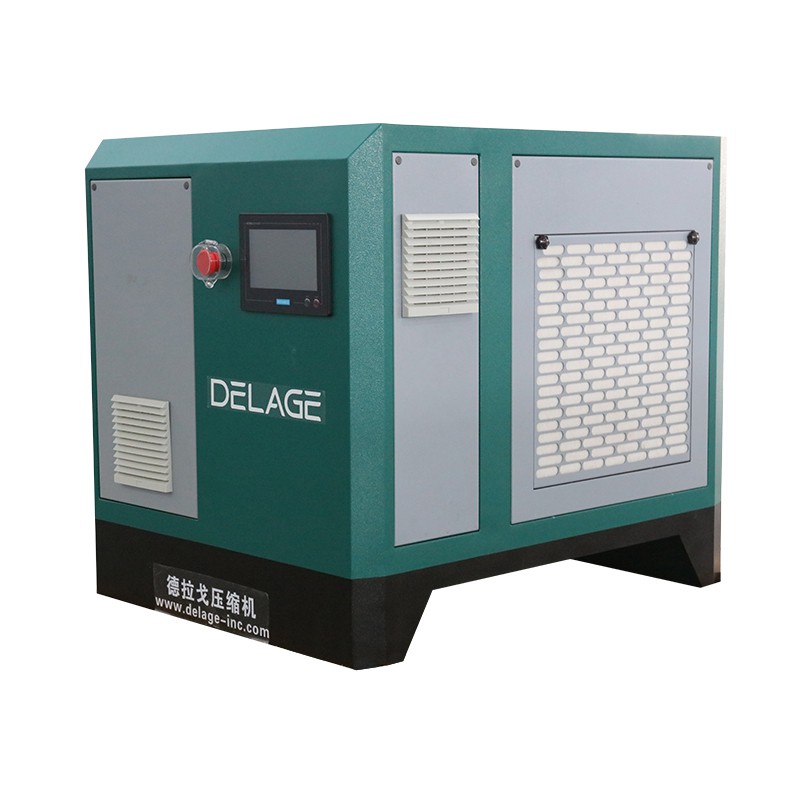
Before we discuss the impact of altitude, it's important to understand the basic working principles of turbo blowers. Turbo blowers, such as the Turbo Blower Fan and Turbo Air Blower, use a high - speed impeller to accelerate air and then convert the kinetic energy of the air into pressure energy. The impeller rotates at extremely high speeds, driven by an electric motor or a turbine. This creates a continuous flow of air with relatively high pressure, which is used in a variety of applications, including wastewater treatment, pneumatic conveying, and industrial ventilation.
Impact of Altitude on Air Density
The most significant factor related to altitude is the change in air density. As altitude increases, the air density decreases. This is because the gravitational pull of the Earth is weaker at higher altitudes, and the air molecules are more spread out. According to the ideal gas law, (PV = nRT), where (P) is pressure, (V) is volume, (n) is the number of moles of gas, (R) is the ideal gas constant, and (T) is temperature. At a constant temperature, as the pressure decreases with increasing altitude, the volume of a given amount of air increases, resulting in a lower density.
The performance of a turbo blower is directly related to the air density. The mass flow rate of the blower, which is the amount of air passing through the blower per unit time, is given by the formula (\dot{m}=\rho Q), where (\dot{m}) is the mass flow rate, (\rho) is the air density, and (Q) is the volumetric flow rate. When the air density (\rho) decreases due to higher altitude, for a given volumetric flow rate (Q), the mass flow rate (\dot{m}) also decreases.

Effects on Pressure Generation
The pressure generated by a turbo blower is also affected by altitude. The pressure rise in a turbo blower is related to the kinetic energy imparted to the air by the impeller. The power input to the blower is used to increase the velocity of the air, and then this kinetic energy is converted into pressure energy.
Since the mass of air being accelerated is reduced at higher altitudes (due to lower air density), the amount of kinetic energy that can be imparted to the air is also reduced. As a result, the pressure rise that the blower can achieve is lower at higher altitudes compared to lower altitudes. This means that a turbo blower that can generate a certain pressure at sea - level may not be able to achieve the same pressure at a high - altitude location.
Impact on Efficiency
Efficiency is another important aspect of turbo blower performance. The efficiency of a turbo blower is defined as the ratio of the useful power output (the power used to increase the pressure and flow of air) to the power input (the electrical or mechanical power supplied to the blower).
At higher altitudes, due to the reduced air density and mass flow rate, the blower may have to work harder to achieve the same volumetric flow rate. This can lead to an increase in the power consumption per unit of air delivered. In some cases, the blower may operate outside of its optimal operating range, resulting in a decrease in efficiency. For example, the impeller may not be able to fully utilize its design capabilities because there is less air mass to work with.
Compensating for Altitude Effects
There are several ways to compensate for the effects of altitude on turbo blower performance. One approach is to select a blower with a higher capacity than what would be required at sea - level. This allows the blower to still meet the required mass flow rate and pressure at high - altitude conditions.
Another option is to use a variable - speed drive (VSD) on the blower. A VSD allows the speed of the impeller to be adjusted. At higher altitudes, the speed of the impeller can be increased to compensate for the lower air density. By increasing the speed, the blower can increase the kinetic energy imparted to the air, which can help to maintain the pressure rise and mass flow rate.
Some advanced turbo blowers, such as the Air Foil Bearing Turbo Blower, are designed to be more adaptable to different operating conditions. These blowers often have better efficiency characteristics over a wider range of air densities and flow rates. The air - foil bearing technology reduces friction and allows for more precise control of the impeller speed, which can help to mitigate the effects of altitude.
Case Studies
Let's consider a wastewater treatment plant that uses a turbo blower for aeration. At sea - level, a particular turbo blower is selected to provide a certain mass flow rate of air to the aeration tanks. The blower is sized based on the air density and pressure requirements at sea - level.
If this same plant is located at a high - altitude location, say 2000 meters above sea - level, the air density is approximately 20% lower than at sea - level. As a result, the mass flow rate of the blower will be reduced by about 20% if no adjustments are made. This can lead to insufficient aeration in the wastewater treatment tanks, which can affect the treatment process and the quality of the treated water.
To address this issue, the plant could either install a larger blower or use a VSD to increase the speed of the existing blower. By increasing the speed, the blower can increase the volumetric flow rate to compensate for the lower air density, and thus maintain the required mass flow rate of air for proper aeration.
Conclusion
In conclusion, altitude has a significant impact on the performance of turbo blowers. The decrease in air density at higher altitudes leads to reduced mass flow rates, lower pressure generation, and potentially decreased efficiency. However, with proper selection and control strategies, these effects can be mitigated.
As a turbo blower supplier, we understand the challenges that our customers face when operating in high - altitude regions. We offer a wide range of turbo blowers, including the Turbo Blower Fan, Turbo Air Blower, and Air Foil Bearing Turbo Blower, which are designed to be adaptable to different operating conditions.
If you are considering purchasing a turbo blower for a high - altitude application, or if you are experiencing performance issues with your existing blower due to altitude, we encourage you to contact us for a detailed consultation. Our team of experts can help you select the right blower for your specific needs and provide guidance on how to optimize its performance at your location.
References
- "Fluid Mechanics" by Frank M. White.
- "Turbo - Machinery: Concepts, Applications, and Design" by S. Larry Dixon.
- Manufacturer's technical documentation on turbo blowers.